Why This Hike Matters
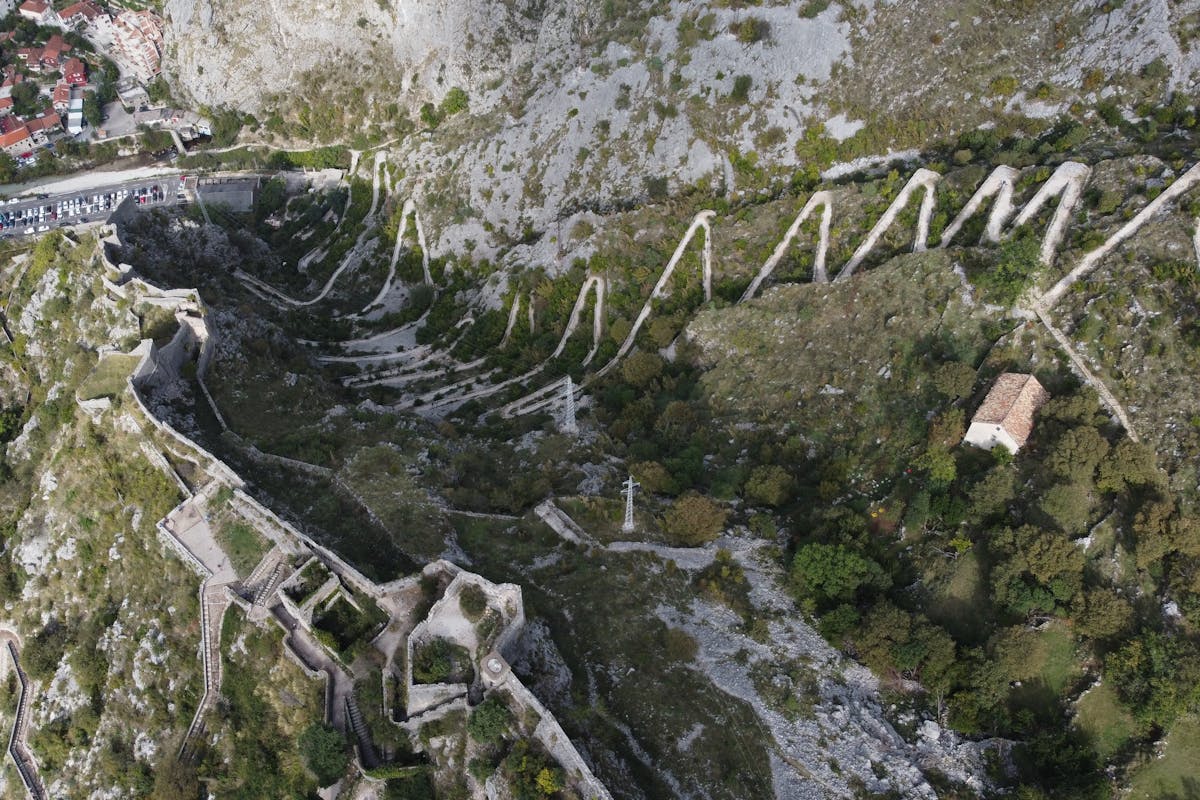
The fortifications above Kotor were built between the 9th and 15th centuries to protect the city from Ottoman and Venetian sieges. They climb from the Old Town's northern gate to the ruins of the San Giovanni fortress at 280 metres above sea level. The walls are continuous, a single defensive ribbon of stone that follows the contours of the mountainside and wraps around the entire settlement below.
Today the hike is Kotor's single most popular activity. On a summer morning the trail is busy by 8am. But the reason people keep climbing is simple: the panorama from the top is one of the finest on the entire Adriatic coast. The fjord-like bay curves away beneath you, cruise ships shrink to the size of bath toys, and the terracotta rooftops of the Old Town form a perfect medieval grid.
Where It Begins
There are two entry points. The main entrance is inside the Old Town through a stone doorway near the Church of St. Mary, you pay the entry fee here. The second entrance is an unmarked trail from the Škurda River canyon on the northern side. Locals use the canyon path to avoid the fee, but it is steeper, less maintained, and entirely unlit. If it is your first time, use the main entrance.
Three Stages of the Climb
Lower Section: Old Town to the Church of Our Lady of Remedy
The first 15 minutes are the steepest. Irregular stone steps zigzag through low scrub with the Old Town rooftops already dropping away below. The small Church of Our Lady of Remedy appears at roughly one-third of the way up, a whitewashed chapel perched on a ledge with a terrace that makes a natural rest stop. Most people pause here for photographs.
Middle Section: The Curtain Walls
Above the church the path follows the inner side of the curtain wall. The steps become more regular and the incline eases slightly. This section offers the best side-angle views of the bay, the kind of shots where the mountains plunge straight into dark-blue water. There are no vendors or water points after the lower section, so carry everything you need.
Upper Section: San Giovanni Fortress
The final stretch brings you to the crumbled remains of the fortress itself. There is no intact building, just walls, archways, and a Montenegrin flag planted on the highest point. The panorama here is the full 270-degree sweep: Kotor below, Perast across the water, the Vrmac ridge to the west, and the open Adriatic beyond the Verige strait.
When to Go
Sunrise and the two hours before sunset are the best windows. The trail faces south and south-west, which means direct afternoon sun in summer, temperatures on the exposed stone regularly exceed 40°C between noon and 3pm in July and August. If you arrive on a cruise ship and have no choice about timing, start immediately after docking. Early morning light also produces the best photographs, with the bay still glassy and the town in soft shadow. Drop back into the Old Town through the northern gate and reward yourself at one of the squares. The cafés on Trg od Oružja serve cold Nikšićko beer and strong Montenegrin coffee, both earned. If you are staying for dinner, check our guide to eating and drinking in Kotor.
Practical Tips
- Water: Carry at least 1.5 litres per person. There is nowhere to buy water above the Old Town.
- Shoes: Trainers with grip. Flip-flops and sandals are dangerous on the polished stone steps.
- Duration: 45-75 minutes up, 30-45 minutes down. Add time for photographs and rest.
- Sun protection: Hat, sunscreen, and sunglasses are essential from May through September. There is almost no shade on the route.
- Camera: A wide-angle lens captures the bay panorama best. Phone cameras handle it well if you use panorama mode at the top.