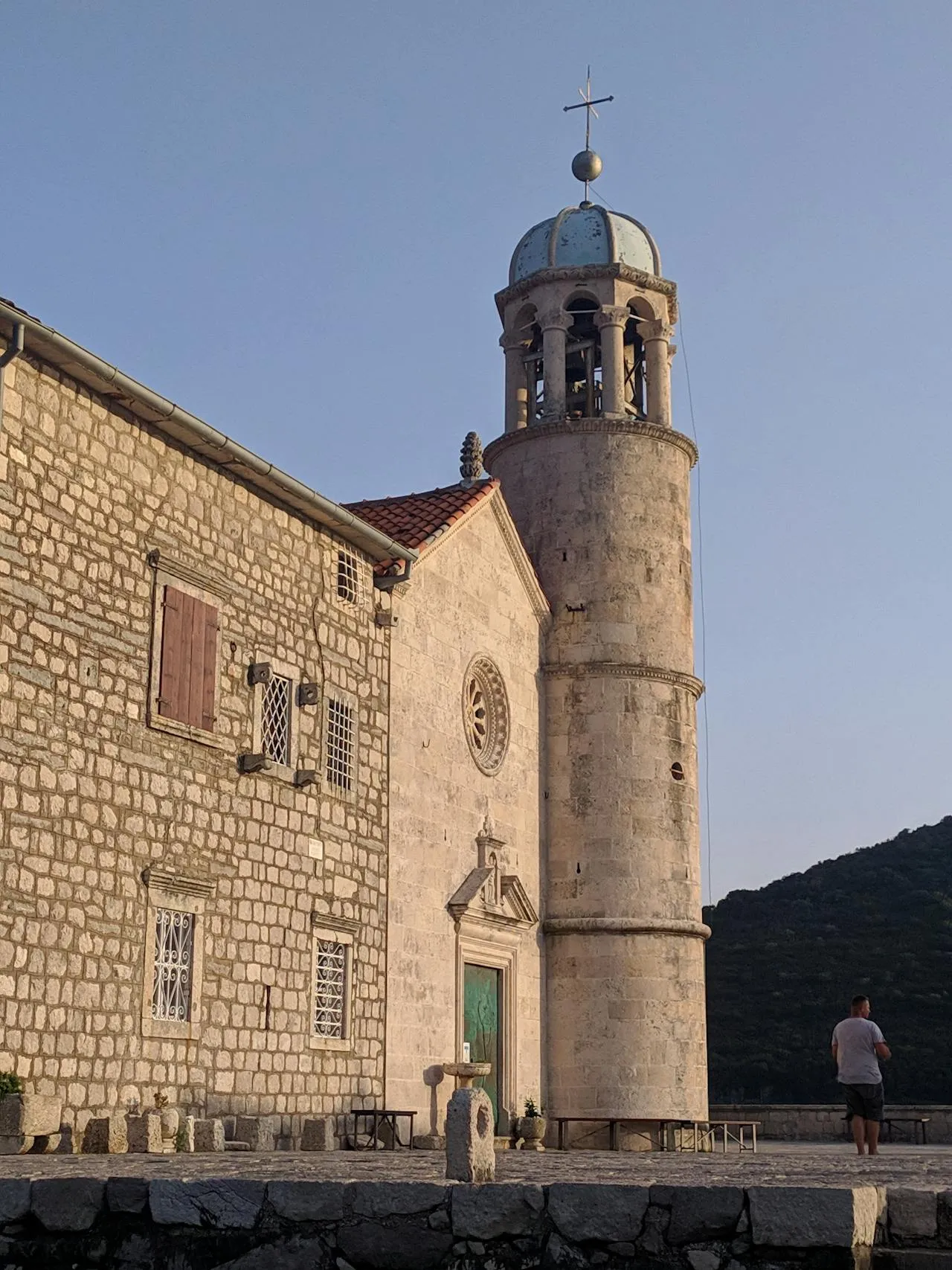
A Republic of Sailors in Miniature
Perast occupies a single slender strip of waterfront beneath Mount St Elias, so narrow that most buildings are only one room deep. Roughly 350 people live here year-round, yet this hamlet once supplied the Venetian Republic with its finest sea captains. Between 1420 and 1797, Perast's shipyards launched galleys, its navigators charted the Adriatic, and its merchant families built palazzo after palazzo along the quay. The Venetian lion still decorates lintels and fountain basins throughout the village.
Driving from Kotor takes fifteen minutes along the bay road, a route that hugs the waterline so closely you could trail a hand in the Adriatic at some points. Park at the northern edge of the village (spaces are scarce and the single main road is one-way in summer) and walk the entire waterfront in ten minutes. That brevity is deceptive; there is more per metre here than almost anywhere on the coast.
Most visitors combine the drive with a day in Kotor, the walled city just fifteen minutes south along the bay.
Two Islands, Two Stories
Sveti Djordje (St George)
The natural island closer to shore is cloaked in dark cypresses and closed to the public. A Benedictine abbey has occupied the site since the 12th century. Monks still maintain the grounds, visible as shadowed movement among the trees from the Perast harbourside. Photographers favour early morning, when the island's silhouette is sharpest against the eastern light.
Ready to Explore the Bay of Kotor?
Free cancellation availableNo card neededLive rates
Gospa od Škrpjela (Our Lady of the Rocks)
On 22 July 1452, the date is recorded precisely, two fishermen hauled up an icon of the Madonna from the seabed near a submerged rock. The townspeople began sinking stones around that rock, and the tradition has continued annually for over five centuries. Today the resulting island holds a small baroque church with 68 paintings by Tripo Kokolja. Skiffs depart the harbour every half-hour; the crossing takes five minutes and costs a few euros.
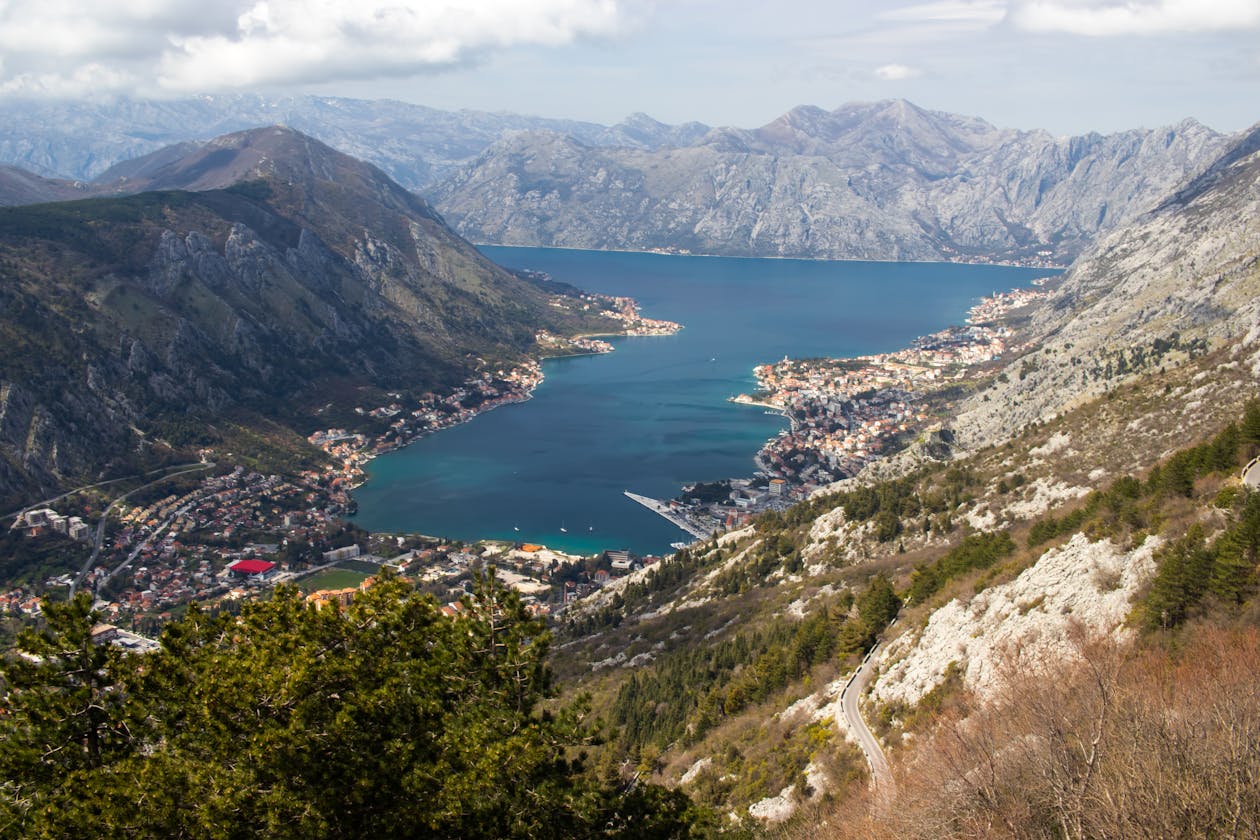
Stone and Memory
Count the palaces along the waterfront and you reach sixteen. Add seventeen Catholic churches and several guard towers, and you begin to grasp how wealthy this tiny settlement once was. The Museum of Perast occupies the Palazzo Bujović, a building so elegant it is often cited as the finest secular structure on the Montenegrin coast. Maritime instruments, ship models, battle flags, and town records fill its rooms.
For the coast beyond the bay, Budva car rental gives access to the riviera, thirty minutes south through the mountain tunnel.
Banja Monastery (a short detour north)
Continuing along the bay road past Perast toward Risan, a minor turn leads to the Banja Monastery. Religious artefacts from Russian, Greek, and Boka dynasties are stored here in modest surroundings. Few visitors make the detour, which is precisely the appeal. Plan your route with our Montenegro driving and routes guide.