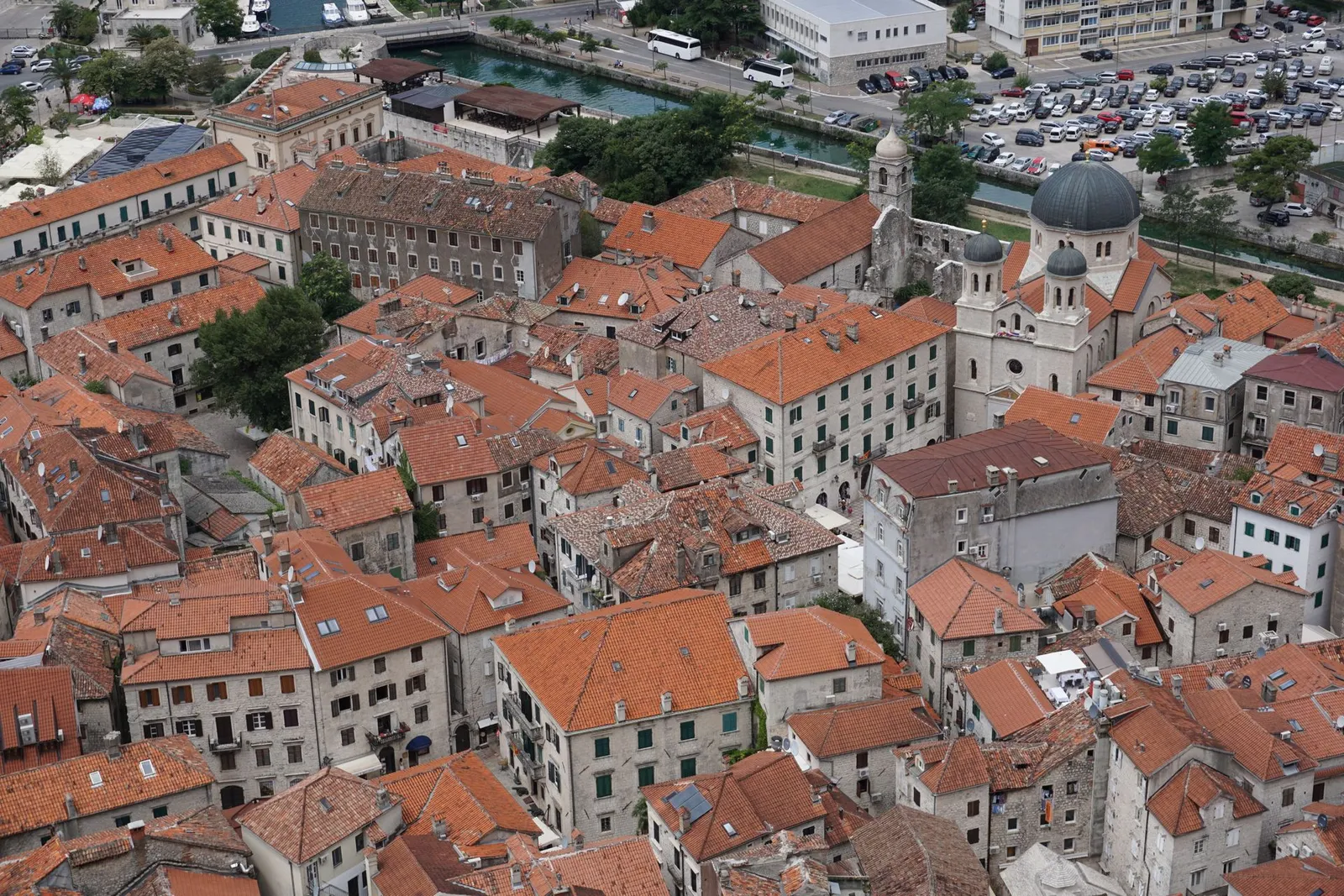
Twelve Centuries Behind the Walls
Fortifications first rose above Kotor in the 6th century, but the town's documented history stretches further, Roman settlement, Byzantine rule, nearly four hundred years under Venice. UNESCO inscribed the entire Natural and Culturo-Historical Region of Kotor in 1979, recognising not just the walled Old Town but the surrounding bay landscape as a single cultural entity. Walk through the Sea Gate (Vrata od Mora), built in 1555, and you step into a medieval street plan that has barely shifted since.
Parking options line the approach from Tivat Airport, 8 km and roughly fifteen minutes away. The largest lot sits below the walls near the River Gate; a second, less crowded option is the Dobrota strip heading north. On days when cruise liners are in port, sometimes three or four at once between May and October, arrive before 07:30 or expect a scramble for spaces.
Neighbouring Tivat is twenty minutes away; visitors can rent a car in Tivat for collection at Porto Montenegro's marina.
Inside the Walls and Above Them
The Fortress of San Giovanni
Precisely 1,355 steps lead from the Old Town's northern edge to the fortress summit at 280 metres. Venetian engineers reinforced the 4.5 km curtain wall between the 15th and 18th centuries, stitching together earlier Byzantine stonework with their own bastions. Bring water, wear proper shoes, and budget forty-five minutes upward. The view from the top, the inner bay splitting into two channels around the Vrmac peninsula, is worth every step. Outside July and August, entry is free.
Cathedral of St Tryphon (1166)
A church has stood on this site since 809 AD, but the present Romanesque structure dates from 1166, making it one of two Roman Catholic cathedrals in Montenegro. The twin bell towers, rebuilt after the 1667 earthquake, define Kotor's skyline. Inside, a ciborium over the main altar shelters 14th-century frescoes, and the reliquary treasury holds gold and silver pieces spanning five centuries. St Tryphon, the city's patron, is celebrated each 3 February with processions through the squares.
Thirty minutes south through the tunnel, car hire Budva opens up the riviera's 21 km of sand.
Ready to Explore the Bay of Kotor?
Free cancellation availableNo card neededLive rates
Beyond the Walls: Day Drives
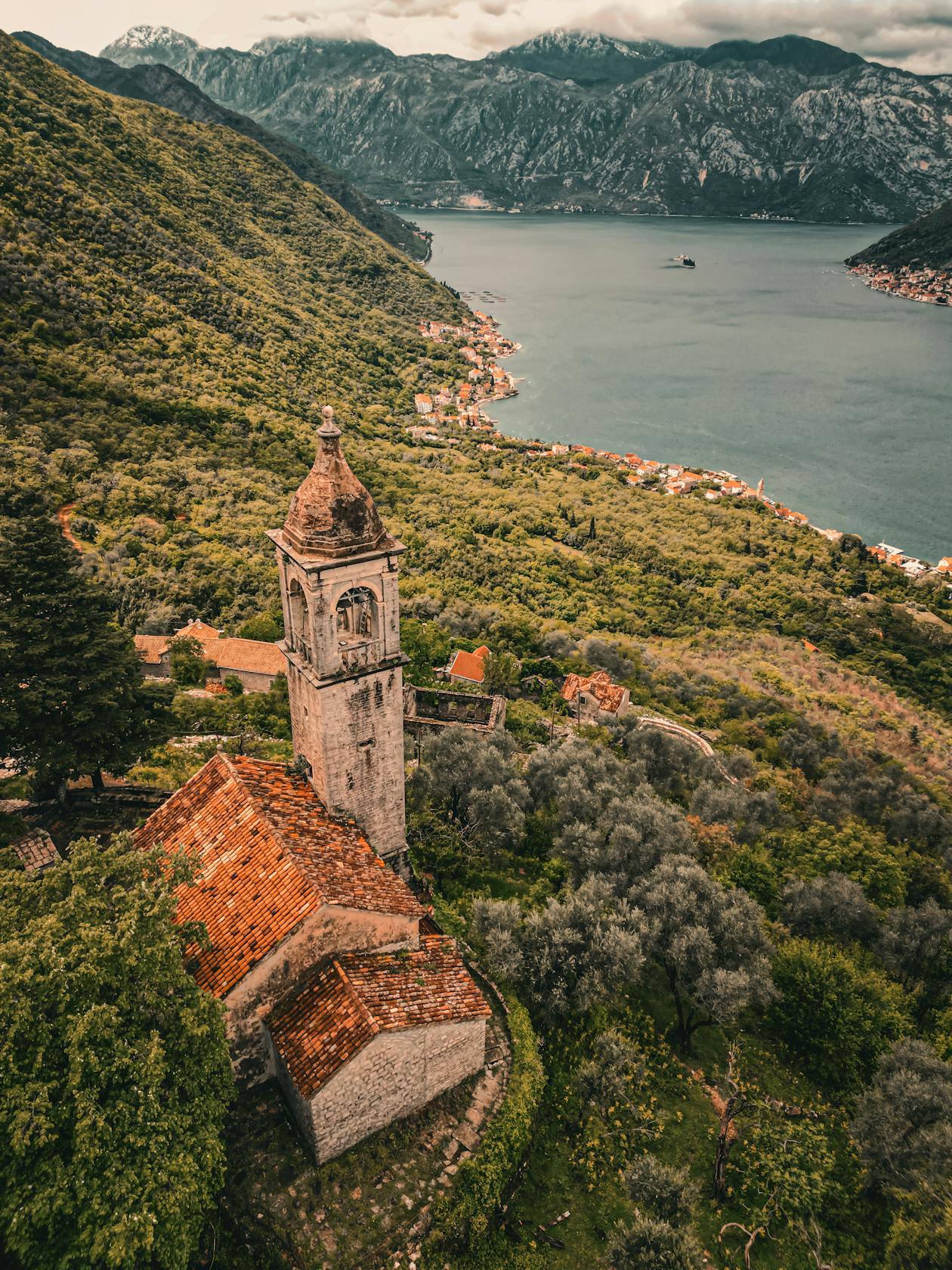
Fifteen minutes north along the bay road, Perast sits in silence compared to Kotor's bustle. Leave the car on the waterfront, board a skiff to Our Lady of the Rocks, the island locals have been enlarging with thrown stones since 1452, and return for coffee at a harbourside palazzo. The drive itself is one of the finest short stretches of road in the country, curving along the waterline beneath karst cliffs. Drive to Perast , 15 minutes along the bay, with boat trips to Our Lady of the Rocks.
An hour of switchbacks through Lovcen National Park deposits you in Cetinje, Montenegro's old royal capital. The monastery shelters relics said to include the hand of John the Baptist. Continue upward to the Njegos Mausoleum, perched at 1,657 metres, where four countries are visible on a clear morning.
Also in Cetinje, the 1871 Royal Court, once the palace of King Nikola I, preserves paintings, weapons, and photographs from the brief era of Montenegrin monarchy. It stands beside the monastery on a tree-lined boulevard in the former capital.
Plan longer routes with our driving in Montenegro guide, covering roads, rules and realistic drive times.
Pickup point map
Every current pickup point across Kotor, Dobrota and Tivat Airport is pinned on the map below. Click any pin to see the exact address and type of handover on offer at that location.