The Road Itself
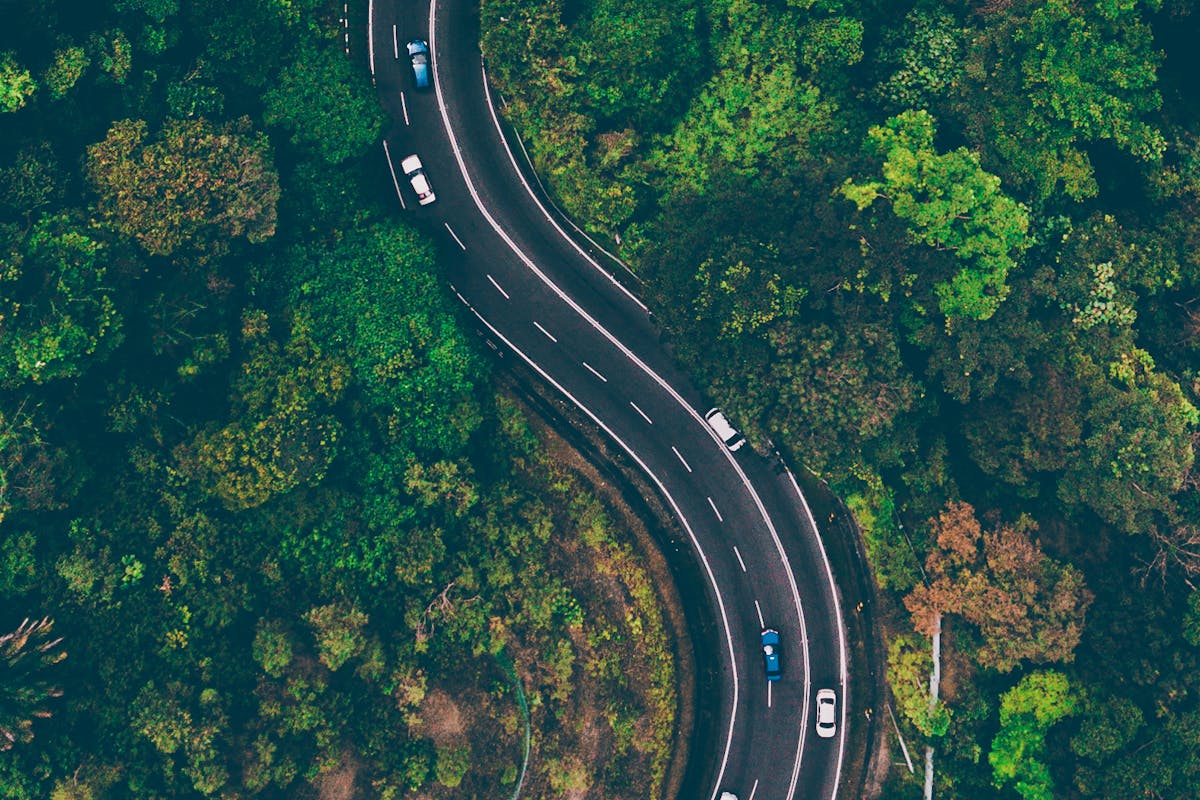
The old road from Kotor to the Lovćen summit was built by the Austro-Hungarians in the 19th century as a military supply route. It climbs from the bay at sea level to the Lovćen National Park entrance at around 1,000 metres in just 16 km, most of that distance consumed by 25 consecutive hairpin bends carved into the mountainside above the town.
Each switchback is numbered on a small stone marker. By bend 10 you are level with the cruise ships. By bend 17 the Old Town is a red speck. By bend 25 you are above the cloud line on overcast days and the entire Bay of Kotor spreads beneath you like a relief map.
Driving the Hairpins
The road is narrow, one-and-a-half lanes for most of its length, and has no guard rails on many of the outer bends. Oncoming traffic includes tourist buses that take up the full width. Pull into the mountain-side passing places and let them through. Drive in second gear on the ascent and use engine braking on the descent. If you are not confident with manual gearboxes, book an automatic, the constant gear changes are tiring otherwise.
The Njegoš Mausoleum
At the summit of Jezerski Vrh, 461 steps lead from the car park to the mausoleum designed by Croatian sculptor Ivan Meštrović and completed in 1974. Inside, a granite statue of Petar II Petrović-Njegoš, Montenegro's poet-philosopher-prince, sits beneath a gold mosaic ceiling. The viewing platform behind the mausoleum offers the most elevated panorama in coastal Montenegro: you can see the Adriatic, the bay, the Durmitor mountains, and on clear days, the Italian coast.
Who Was Njegoš?
Petar II Petrović-Njegoš ruled Montenegro from 1830 to 1851 and is regarded as the founder of modern Montenegrin national identity. His epic poem 'The Mountain Wreath' is the country's most important literary work. He chose to be buried on Mount Lovćen so he could watch over the land he governed. Montenegrins treat the mausoleum as a place of national pilgrimage, the 461 steps are climbed in respectful silence.
Descending to Cetinje
Rather than returning to Kotor the same way, continue over the mountain and descend to Cetinje, Montenegro's royal and spiritual capital. The road from Lovćen to Cetinje is wider and less demanding than the bay-side hairpins. Cetinje itself is worth an hour: the monastery houses relics including what is claimed to be the right hand of John the Baptist, and the former royal palace is now a museum of Montenegrin history.
What Car to Take
Any car handles the road in dry conditions, the surface is tarmac throughout. But a compact with decent torque makes the hairpins less stressful. The Skoda Octavia or Toyota Corolla from our fleet are ideal. Avoid anything wider than a standard SUV, the passing places are tight. In winter (November to March) the upper sections may have ice or snow; check conditions before setting out and carry chains if advised.
Recommended Stops
- Bend 17 viewpoint: The most famous photograph of Kotor from above. Pull off at the marked viewpoint and walk 20 metres to the edge.
- Njeguši village: Just past the hairpins, this mountain hamlet is famous for smoked ham (njeguški pršut) and cheese. Buy directly from farmhouses along the road.
- Mausoleum summit: Allow 45 minutes for the 461 steps, the interior, and the viewing platform.
- Cetinje: The old capital. Visit the Cetinje Monastery and the King Nikola Museum. Grab a coffee in the main square.
Alternative Return Route
From Cetinje, take the P1 road north through Rijeka Crnojevića and along the shore of Lake Skadar. This adds 90 minutes but passes through completely different landscape, green river valleys and lake wetlands instead of mountain rock. If you have time, combine this with a stop at the Roman mosaics in Risan.