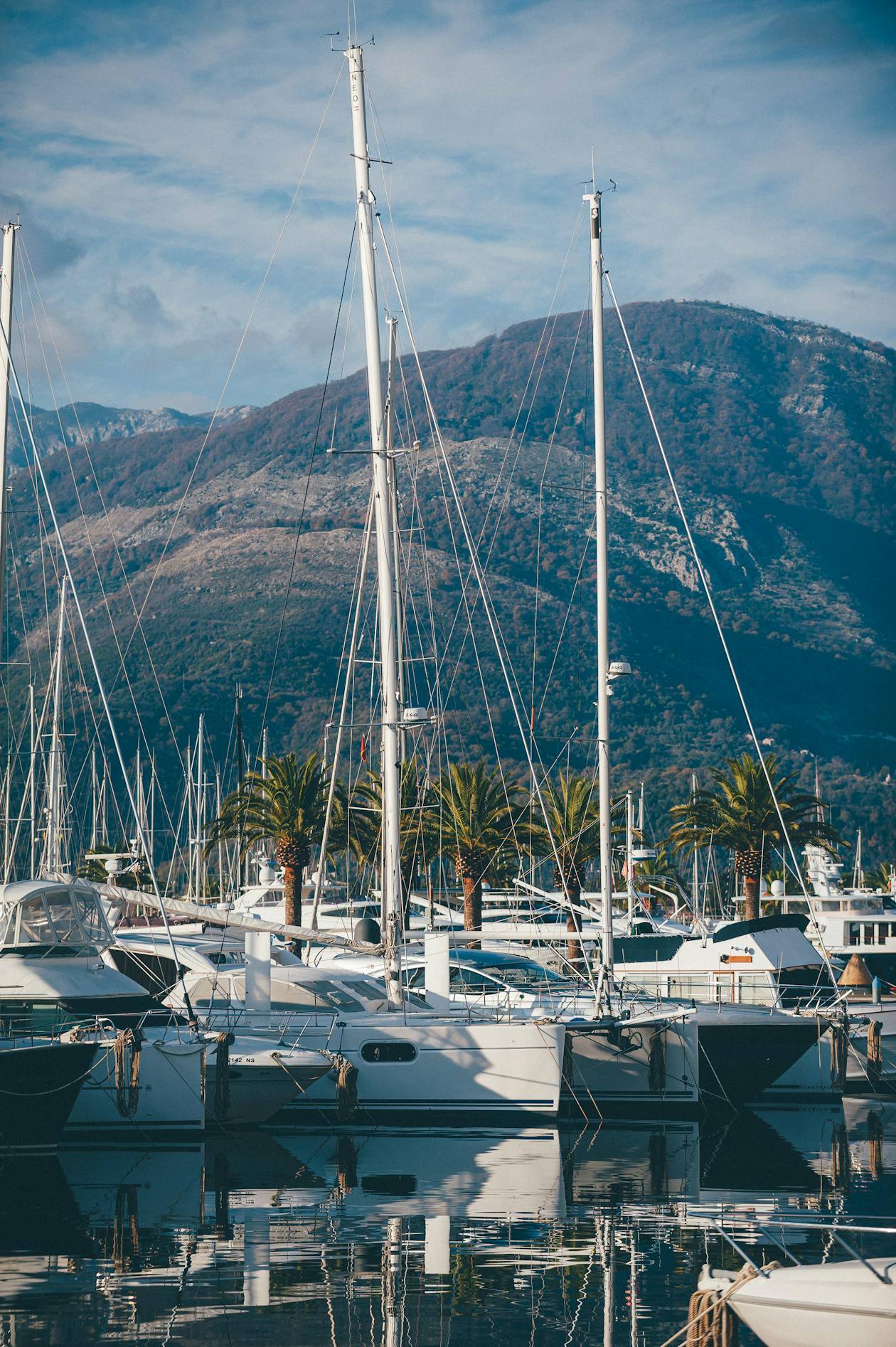
Naval Shipyard Turned Mediterranean Playground
Until the 1990s, Tivat was a Yugoslav navy town, a closed facility where submarines were serviced and warships provisioned. Visitors were neither expected nor particularly welcome. That history makes the transformation all the more remarkable. Canadian billionaire Peter Munk acquired the decommissioned Arsenal in 2006, and Porto Montenegro was born: 450 berths, a waterfront promenade, and a new identity for the entire town.
For travellers arriving at Tivat Airport (code TIV, 4 km from the town centre and 8 km from Kotor), the town functions as both gateway and destination. Collect a rental car at arrivals and you can be inside Kotor's walls in twenty minutes, or parked at a Tivat beach bar in five. The two towns share the bay but almost nothing else in character.
Arriving by air? Tivat airport car hire puts you on the marina in minutes.
Seventeen Beaches, Three Kilometres
Tivat municipality counts 17 beaches along a surprisingly varied 3 km of coast. Two are particularly worth the drive:
South through the mountain tunnel, Budva's beaches are thirty minutes away for a full-day riviera trip.
- Plavi Horizonti (Blue Horizons) on the Luštica peninsula: fine white sand in a sheltered cove, water so transparent you can count pebbles at three metres. Reached via a short drive from Tivat centre
- Sveti Marko island beaches near Przno: remnants of a 1960s resort, now half-reclaimed by nature. Boat taxis run from Przno harbour in summer
Ready to Explore the Bay of Kotor?
Free cancellation availableNo card neededLive rates
Porto Montenegro: The Marina District
The old Arsenal dry docks now shelter superyachts up to 250 metres long. The surrounding waterfront village has been purpose-built with boutiques, a pool club, waterfront restaurants, and a Naval Heritage Collection housed in the original submarine repair buildings. Summer evenings bring open-air events on the quayside. Whether you arrive by car or by 60-metre catamaran, the dress code is the same: relaxed Mediterranean.
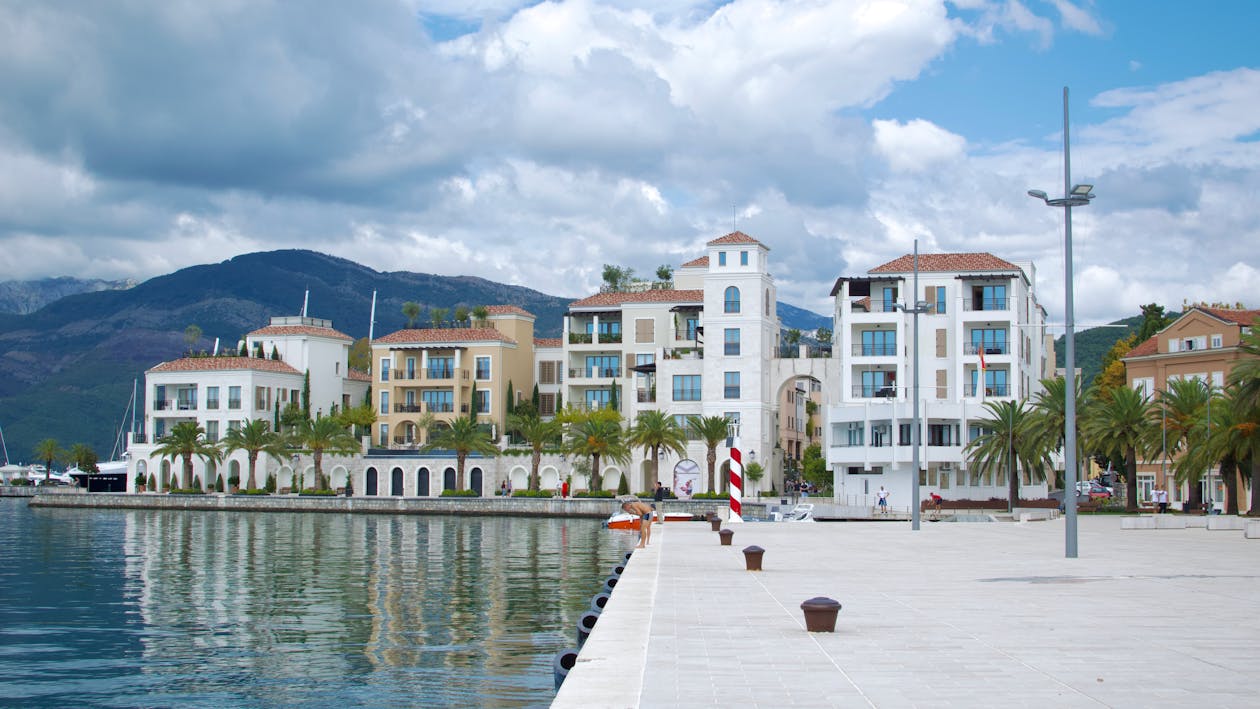
Beyond the Marina
Prevlaka Peninsula: St Michael Archangel
On the tip of the Prevlaka peninsula, archaeological digs continue to reveal layers of a 10th-century monastic complex. The site is modest but atmospheric, stone walls, scattered column fragments, and views across the Tivat strait toward Herceg Novi.
Sveti Antun Padovanski (1734)
This compact Baroque church on a hillside above Tivat contains religious paintings and silver reliquaries. The real draw is the terrace outside: an elevated panorama stretching from Porto Montenegro's masts to Kotor's fortress walls across the water.
Kotor's Maritime Museum, a twenty-minute drive away, puts Tivat's naval past in context. Displays cover centuries of Boka seamanship under Venetian and Austro-Hungarian flags, the tradition that ultimately led to a submarine base where luxury yachts now park.
For a base closer to the medieval fortress, compare car hire Kotor, a twenty-minute drive through the tunnel.